The headquarters of SES in Betzdorf offered a particularly fitting setting for the 2026 MoSarLorLux Engineering Day, a traditional gathering of engineers from Lorraine (IESF), Saarland (VDI Bezirksverein Saar), Moselle (VDI Moselbezirksverein), and Luxembourg (IngSci). It was here that Luxembourg’s modern space adventure took shape four decades ago. Today, the company that helped bring satellite television to millions of European households is preparing for a different future: one defined by secure communications, interconnected orbital networks, government missions and a faster approach to satellite development.
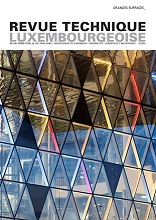
That transformation was the central message of Philippe Glaesener’s presentation during the event’s opening academic session. Alongside the SES perspective, Bob Lamboray of the Luxembourg Space Agency (LSA) described the rapid changes reshaping the wider space economy, while Minister of the Economy Lex Delles emphasised the sector’s importance to Luxembourg’s industrial diversification. The day brought together engineers, scientists, students and professionals from across the Greater Region, under a theme that echoed the title of a special space edition of Revue Technique: “Space, the Unlimited Frontier”.

For Thierry Flies, President of Ingénieurs et Scientifiques du Luxembourg, the event was also an opportunity to strengthen cross-border ties and encourage younger generations. He highlighted the presence of young participants and the visits to companies and research organisations, placing engineering collaboration at the heart of the programme. The choice of SES was more than symbolic: the company’s evolution illustrates both the origins of Luxembourg’s space sector and the challenges now confronting it.
Three forces reshaping the space economy
Why is the space sector attracting so much attention and investment? Philippe Glaesener (Senior Vice President, Global Government at SES) explains it’s a consequence of technological innovation, the availability of capital and the growing demand from governments — particularly in defence and security.
Over the past decade, advances in launch systems, satellites, networking and digital technologies have accelerated change. Innovations initially developed for defence increasingly find institutional and commercial applications. At the same time, investors see a market in which governments are seeking capabilities that they cannot always develop or deploy quickly enough on their own.

Space has consequently become a strategic dimension of national security. Satellite communications are only one component. Earth observation, space situational awareness, missile warning and tracking, and positioning, navigation and timing are increasingly important to defence planning. Countries want secure access to these capabilities, yet sovereign infrastructure can be expensive, complex and slow to establish.
This creates a new role for commercial operators. Rather than merely leasing satellite capacity, they can provide sophisticated services that complement national systems. As Glaesener explained, the commercial sector is becoming a partner to governments seeking capabilities without having to build every element themselves. For SES, the implications are far-reaching: government business is becoming an increasingly important growth engine.
Beyond television: a diversified customer base
SES remains closely associated with Astra and the satellite television revolution. Glaesener recalled that its media activities still deliver television channels to vast audiences, both through direct-to-home reception and through distribution into terrestrial networks. But the company’s activities now extend far beyond broadcasting.
Government services have expanded markedly, particularly among allied nations. Mobility services connect aircraft and vessels, while fixed-data solutions link corporate networks and provide connectivity or backup capacity in areas where terrestrial infrastructure is limited or vulnerable. These markets have different technical demands, but they increasingly share one requirement: reliable, secure connectivity that remains available when part of a network fails.
SES approaches this challenge through a combination of orbital layers. Its geostationary satellites, approximately 36,000 kilometres above Earth, provide broad coverage for broadcasting and communications. Its medium-Earth-orbit (MEO) constellation, operating at around 8,000 kilometres, supports high-capacity, lower-latency links. Low-Earth-orbit (LEO) systems, including those operated by partners, add another layer to the overall architecture.

The central strategic idea is not simply to own satellites in multiple orbits, but to make different networks work together. In a secure service, traffic must be capable of switching between satellites, orbital layers and terrestrial infrastructure without disrupting the customer. That requires intelligent routing, network management, encryption and extensive ground infrastructure.
Glaesener stressed that the business is moving towards end-to-end services. The customer is not buying a “mirror in the sky” but a functioning connection delivered to the point where it is needed. SES’s globally distributed teleports and fibre connections form part of this architecture, linking space-based capacity with terrestrial networks. Increasingly, software and automated orchestration are as important as the satellites themselves.
Security, sovereignty and the government market
The defence market provides a particularly clear illustration of this shift. Glaesener described SES’s work with NATO and allied countries, including dedicated secure networks designed to meet demanding operational requirements. For smaller states especially, the attraction of commercial services is that they can obtain resilient, geographically flexible capabilities without financing and managing an entire satellite system independently.
He also highlighted LuxGovSat, the joint venture between SES and the Luxembourg government. Its GovSat-1 satellite was developed for secure governmental and military communications. With demand rising, the partners have decided to pursue a second satellite with enhanced capabilities. The broader message was that government customers increasingly need networks that are secure, scalable and able to respond rapidly to changing operational circumstances.
Another major development is IRIS², the European Union’s planned secure satellite connectivity constellation. Glaesener presented it as a landmark programme for Europe’s technological and strategic autonomy, with SES participating alongside other European operators. The project combines orbital infrastructure and ground systems to provide secure connectivity for institutional users and, through its commercial dimension, other customers. Luxembourg is expected to play an operational role through facilities in Bettembourg.
For SES, these projects reflect a deeper change in the relationship between operators and public authorities. Governments want sovereignty and control over sensitive communications, but they also need access to rapidly evolving technologies. Commercial companies can help bridge that gap by supplying dedicated, protected services within larger networks. Glaesener’s vision is of an operator that can offer customers their own secure environment while retaining the flexibility and scale of a shared infrastructure.
The same logic extends beyond conventional satellite communications. SES is involved in European navigation-related ground infrastructure and services, and Glaesener pointed to optical communications and quantum-key distribution as emerging areas. Such technologies could provide additional protection for sensitive data as the cybersecurity landscape evolves. He also discussed direct-to-device connectivity, in which ordinary mobile devices communicate with satellites, and the potential for SES’s MEO systems to relay traffic from LEO networks to terrestrial gateways.
A new industrial model for SES
The traditional model, Glaesener argued, is too slow for an industry undergoing rapid technological change. Large satellites have historically been specified, ordered, manufactured and operated over very long cycles. Such programmes can deliver dependable assets, but they also make it difficult to incorporate new technologies quickly.
“We must do that to survive,” he said of the need to bring New Space approaches into SES’s daily operations. His point was not that established satellite engineering should be abandoned. Rather, SES must combine its operational experience with faster prototyping, testing and iterative development. It needs to learn from trials, correct shortcomings and integrate improvements into subsequent missions at a much quicker pace.
This ambition underpins SES’s move into satellite payload development, integration and testing in Luxembourg. The company aims to develop and integrate payloads onto satellite platforms in Kockelscheuer. The approach would give SES greater influence over critical elements of its supply chain and help shorten the path from innovation to deployment.
Glaesener outlined a sequence of Pathfinder test missions intended to validate technologies before their wider introduction into future satellite generations. He also described plans for a substantial number of satellites linked to SES and European programmes to be built or integrated in Luxembourg over the coming years. These figures and timetables are programme ambitions, rather than completed results, but they indicate the scale of the intended industrial shift.

SES’s long-term direction is a move from a satellite infrastructure and service provider towards a comprehensive space-solutions company. In addition to communications, adjacent missions involve data relay, secure governmental applications and other services that can use the company’s orbital and terrestrial capabilities. Its strategic emphasis remains strongly focused on MEO, with the upcoming 3rd generation system called meoSphere, combined with GEO assets and partnerships in LEO.
The objective is a network that is resilient by design with MEO and its advantages at its core: interconnected, multi-orbit and increasingly capable of using intelligent software to manage traffic and respond to disruptions. For engineers, this means that the future of satellite operations will depend on systems architecture, electronics, software, cybersecurity, artificial intelligence and ground infrastructure as much as on spacecraft themselves.
Luxembourg’s ecosystem in a changing global industry
Bob Lamboray (Luxembourg Space Agency) broadened the perspective by showing how quickly the space industry has changed beyond SES. Reusable and increasingly powerful launch systems are changing the economics of access to orbit. Large LEO constellations and direct-to-device services are transforming communications. Commercial space stations, renewed lunar exploration, in-orbit servicing and debris-removal concepts are opening new fields, even where business models remain uncertain.
At the same time, congestion in orbit creates new responsibilities. Debris monitoring, collision avoidance and space traffic management are becoming essential to the sustainability of space operations. Lamboray’s presentation made clear that innovation and stewardship must advance together.
Luxembourg’s response has been to develop a diversified ecosystem around its historic anchor company. Lamboray recalled the foundation of SES in 1985, the launch of Astra 1A in 1988, Luxembourg’s accession to the European Space Agency in 2005, the space-resources initiative launched in 2016 and the establishment of the Luxembourg Space Agency in 2018. Each milestone expanded the country’s capacity to support activities beyond satellite broadcasting.

LSA’s role, he explained, differs from that of agencies operating their own major missions. It works to foster a favourable environment for commercial activity: helping companies innovate, supporting startups, attracting international players, building links between research and industry and promoting the skills required by the sector. Its aim is not simply to fund promising ideas, but to help create businesses capable of surviving and growing commercially.
Lamboray mentions the figures of more than 80 companies active in Luxembourg’s space sector and more than 1,600 people working in the industry, according to the agency’s survey cited during his presentation. The range of activities is broad. He highlighted ground systems and optical communications, lightweight structures and composites, satellite manufacturing, propulsion, robotics, lunar rovers and Earth-observation services. Companies such as HITEC, Gradel, EURO-COMPOSITES, Redwire, ispace and Hydrosat illustrate the diversity of expertise now present in the country.
The examples also demonstrate that the space economy is not limited to what happens in orbit. Satellite data can support agriculture and water management; precision engineering and advanced materials can serve demanding spacecraft applications; and robotic systems can contribute to future exploration or servicing missions. Luxembourg’s opportunity lies partly in connecting these specialised capabilities with larger international programmes.
Lamboray also addressed the human dimension. The Astronaut for a Day initiative seeks to inspire secondary-school students to pursue science and technology. Cooperation with the University of Luxembourg and the European Space Resources Innovation Centre (ESRIC) aims to align research, education and industrial needs. Developing talent, in this view, is not an optional extra but a condition for maintaining a competitive space industry.
Industrial diversification — and a role for the Greater Region
Lex Delles placed these developments in the longer history of Luxembourg’s economic diversification. SES, he recalled, showed how technological expertise, entrepreneurship and sustained commitment could open a new industrial field. He argued that the task now is to create conditions in which new companies can turn research into prototypes, find partners and customers, and scale up.
The future Space Campus in Kockelscheuer is part of that strategy. Delles pointed to planned testing and validation capabilities that would give companies access to advanced facilities in Luxembourg. He also welcomed SES’s intention to add manufacturing, assembly, integration and testing activities to its established role as a satellite operator. Together, these investments could create opportunities for suppliers, engineers, researchers and future recruits.

The minister stressed the value of cross-border cooperation. “A conversation during a site visit can reveal a shared technical problem,” he observed, describing how meetings between companies, researchers and students can lead to placements, partnerships or business opportunities. This practical spirit is central to MoSarLorLux: the Greater Region brings together industrial experience, research institutions and engineering talent that can reinforce one another.
For SES, the surrounding ecosystem is increasingly relevant to its own transformation. Glaesener underlined the importance of working with innovative companies, attracting specialised skills and benefiting from a supportive public environment during the early, riskier stages of technological development. For smaller firms, meanwhile, a major operator investing in new facilities and systems can generate opportunities to contribute components, software, testing expertise and new ideas.
From a successful past to an industrial future
The 2026 MoSarLorLux Engineering Day therefore offered more than a retrospective on Luxembourg’s space success story. It showed an industry attempting to adapt to a new set of imperatives: speed, security, resilience, sovereignty and technological integration. The traditional distinction between satellites and ground infrastructure is becoming less meaningful, while cooperation between established operators, startups, public institutions and researchers is increasingly important.
The contrast with SES’s origins is striking. The company that began by transforming television distribution is now positioning itself as a provider of integrated space services for a world in which secure connectivity is strategic infrastructure. Its plans to bring more development and integration activities to Luxembourg could give that transformation a tangible industrial dimension.
For the engineers and scientists gathered in Betzdorf, the message was also one of opportunity. The space sector needs people who can connect disciplines, solve complex technical problems and turn emerging technologies into dependable services. As Delles put it to the younger participants, they should imagine where their own skills might fit. The future of Luxembourg’s space economy will depend not only on what is launched into orbit, but on the knowledge, partnerships and capabilities developed on the ground.
Photos: academic session and tour of SES:


Visit to partner companies
In the afternoon, participants splitted into six different groups to visit Redwire Space Luxembourg, LIST, OQ Technology, Space Cargo Unlimited, GRADEL and Euro-Composites Group.